The CallMe project made me laugh - and then made me a bit uneasy.
It's a small open-source tool where your AI coding assistant works in the background and calls your phone when it's done, stuck, or needs a decision. That's the whole idea: you step away, and the machine escalates to you only when it hits the edge of autonomy.
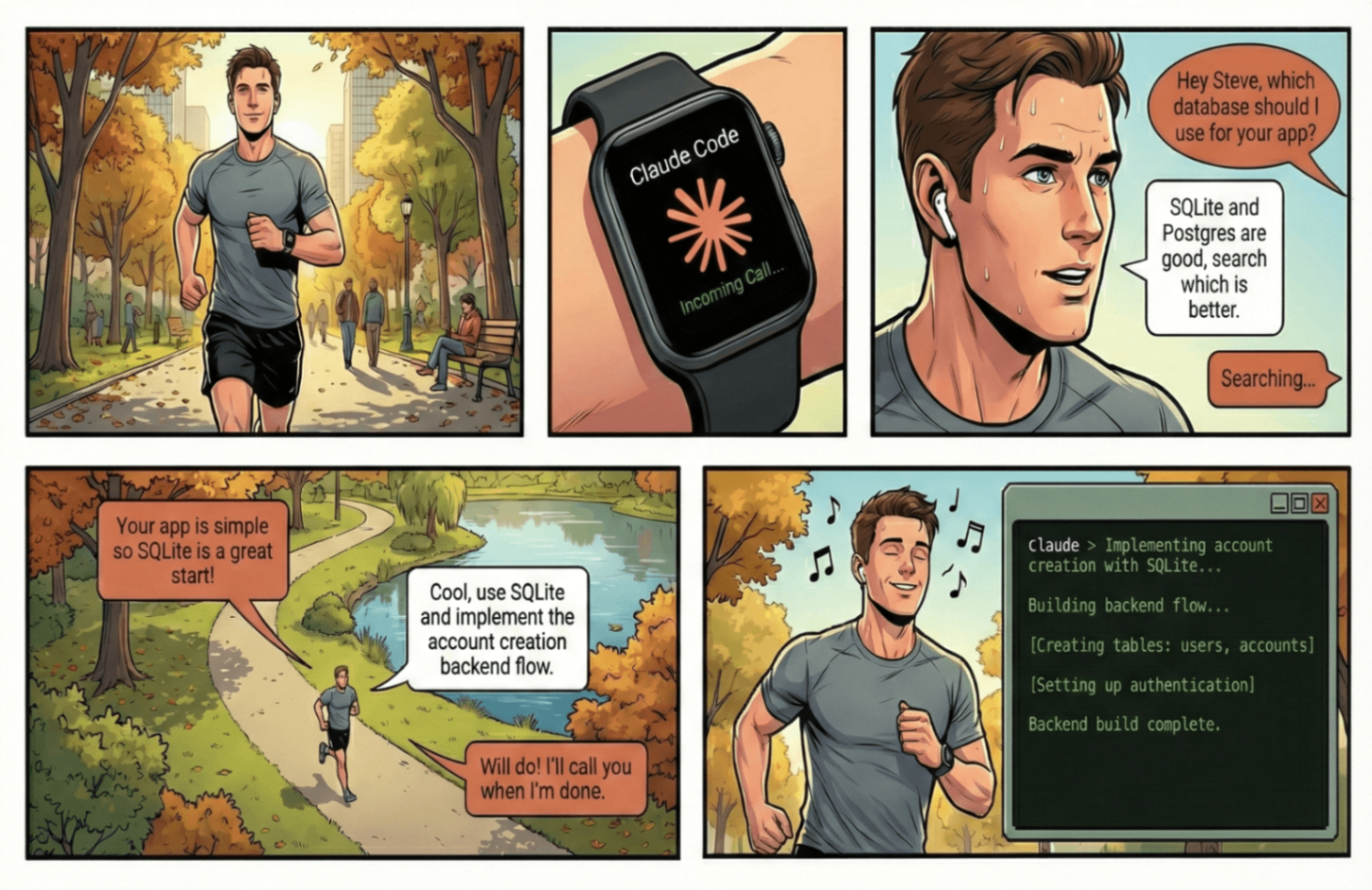
Call it progress if you want, but there's something oddly self-destructive happening in the developer world right now: we're building tools that make devs easier to remove.
Level 2 Call Center Operator (AI Escalations)
Because once the job is reduced to answering calls and making a few choices, the obvious question becomes: why does that person need to be a developer at all?
At this rate, "software engineer" gets rebranded as Level 2 Call Center Operator (AI Escalations):
"Hi, thanks for calling. Have you tried turning the prompt off and on again?"
Press 1 to approve the PR, press 2 to argue about naming, press 3 to accept the risk and yolo to production.
The Quiet Downfall
If the AI is doing the execution - writing, wiring, refactoring, iterating - then the "value" shifts to whoever can give the right direction and accept the right tradeoffs. Today that might still be a senior engineer. But how long until the call is answered by a PM? A stakeholder? A CxO who wants the outcome more than the implementation? Or, most ironically, another AI that has enough context to choose between options and keep the workflow moving?
This is the quiet downfall: developers aren't being pushed out by outsiders. They're voluntarily designing themselves out of the loop by celebrating anything that moves them from "doing" to "supervising." That sounds like elevation - until you realize supervision is a role that can be reassigned, and "the person who occasionally approves" is not a monopoly.
When Execution Becomes Cheap
Historically, developers were the leverage point because reality had friction. Building took time, skill, and careful coordination. Execution was expensive. Now execution is trending toward being cheap, abundant, and automated. How long until an AI can iterate through thousands of candidate solutions faster and cheaper than a human can even set up the project? When that happens, the scarce resource becomes judgment: prioritization, taste, risk tolerance, accountability. Power migrates to whoever owns those decisions - not whoever types the code.
A Warning Label
So yes: CallMe is clever. But it also reads like a warning label. It's a small step toward a world where software is produced by default, and humans are only pulled in to say "yes," "no," or "ship it." And once that becomes the norm, it's not hard to imagine the phone ringing… and nobody needing a developer to answer.
PS. Here is the link you've been looking for: github.com/ZeframLou/call-me